
Baba Ganoush vs. Hummus
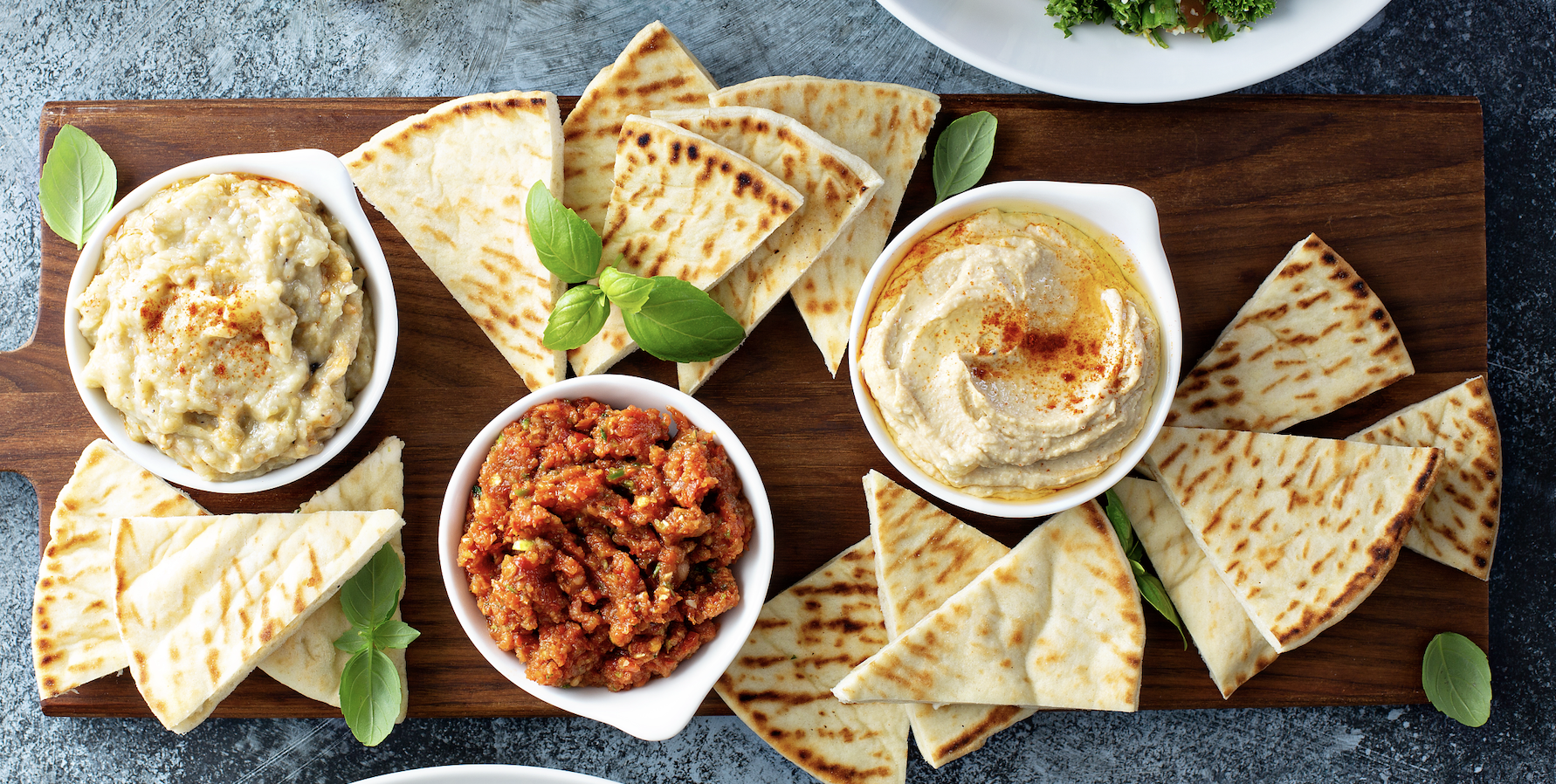
Picture a sunlit table on Newbury Street, warm pita fresh from the oven, and two dips glistening under a drizzle of golden olive oil. One is smoky and silky, the other creamy and bright. Baba ganoush and hummus are the beloved cornerstones of any Mediterranean spread, yet they tell very different stories. If you have ever wondered which one deserves the first swipe of your bread, this guide is for you.
Where They Come From
Both dips trace their roots to the Eastern Mediterranean and the Levant, where generations gathered around communal tables long before either dish had a menu listing.
Hummus takes its name from the Arabic word for chickpeas. Recipes for chickpea-and-sesame purées appear in centuries-old cookbooks, and today it belongs to cuisines across Lebanon, Israel, Syria, Greece, and beyond. It is the diplomatic dip, welcomed everywhere.
Baba ganoush comes from the smoky world of roasted eggplant. Its playful name loosely translates to "pampered papa," and the dish carries a rich, fire-kissed character that feels rustic and refined at once.
The Ingredients That Make Them
Here is where the two dips begin to part ways. While they share a few pantry friends, their foundations could not be more different.
Hummus is built around:
- Chickpeas, blended until velvety
- Tahini (sesame paste)
- Fresh lemon juice
- Garlic
- Olive oil and a pinch of salt
Baba ganoush is built around:
- Eggplant, roasted or charred until tender
- Tahini
- Lemon juice
- Garlic
- Olive oil, often finished with pomegranate or parsley
Notice the overlap? Tahini, lemon, and garlic form a shared backbone. The star ingredient is what sets them apart: humble chickpeas versus smoky eggplant.
Their Taste Difference
Hummus is smooth, dense, and comforting. The chickpeas lend an earthy, nutty warmth, while lemon and garlic keep every bite lively. It coats the palate in a rich, satisfying way, like a soft embrace on a slice of warm bread.
Baba ganoush is airier and more delicate. The roasted eggplant delivers a deep, smoky perfume with a whisper of bitterness balanced by bright lemon. Its texture is looser and more spoonable, almost luxurious as it slips across the tongue.
When to Choose Hummus
- As a hearty starter with warm pita and crisp vegetables
- Spread thick beneath grilled chicken, lamb, or falafel
- As a protein-rich anchor for a mezze platter
- Dolloped into grain bowls for creamy comfort
When to Choose Baba Ganoush
- As a lighter, smoky counterpoint to richer dishes
- Paired with charred flatbread and briny olives
- Alongside grilled fish or roasted vegetables
- When you want a dip that feels refined yet rustic
Common Misconceptions Regarding Hummus & Baba Ganoush
A few myths tend to follow these dips around, so let us clear the air.
"They taste the same." Not quite. They share tahini and lemon, but chickpeas and eggplant create entirely different personalities on the palate.
"Baba ganoush is just hummus with eggplant." A charming idea, but no. The roasting of the eggplant introduces smoke and softness that chickpeas simply cannot mimic.
"One is healthier than the other." Both are plant-forward and nourishing. Hummus offers more protein from chickpeas, while baba ganoush tends to be lighter and lower in calories.
Come Taste the Difference
Reserve your table at Eva Boston today!
Flavors beyond the plate
Culinary tales that capture the essence of Mediterranean spirit
Your table awaits
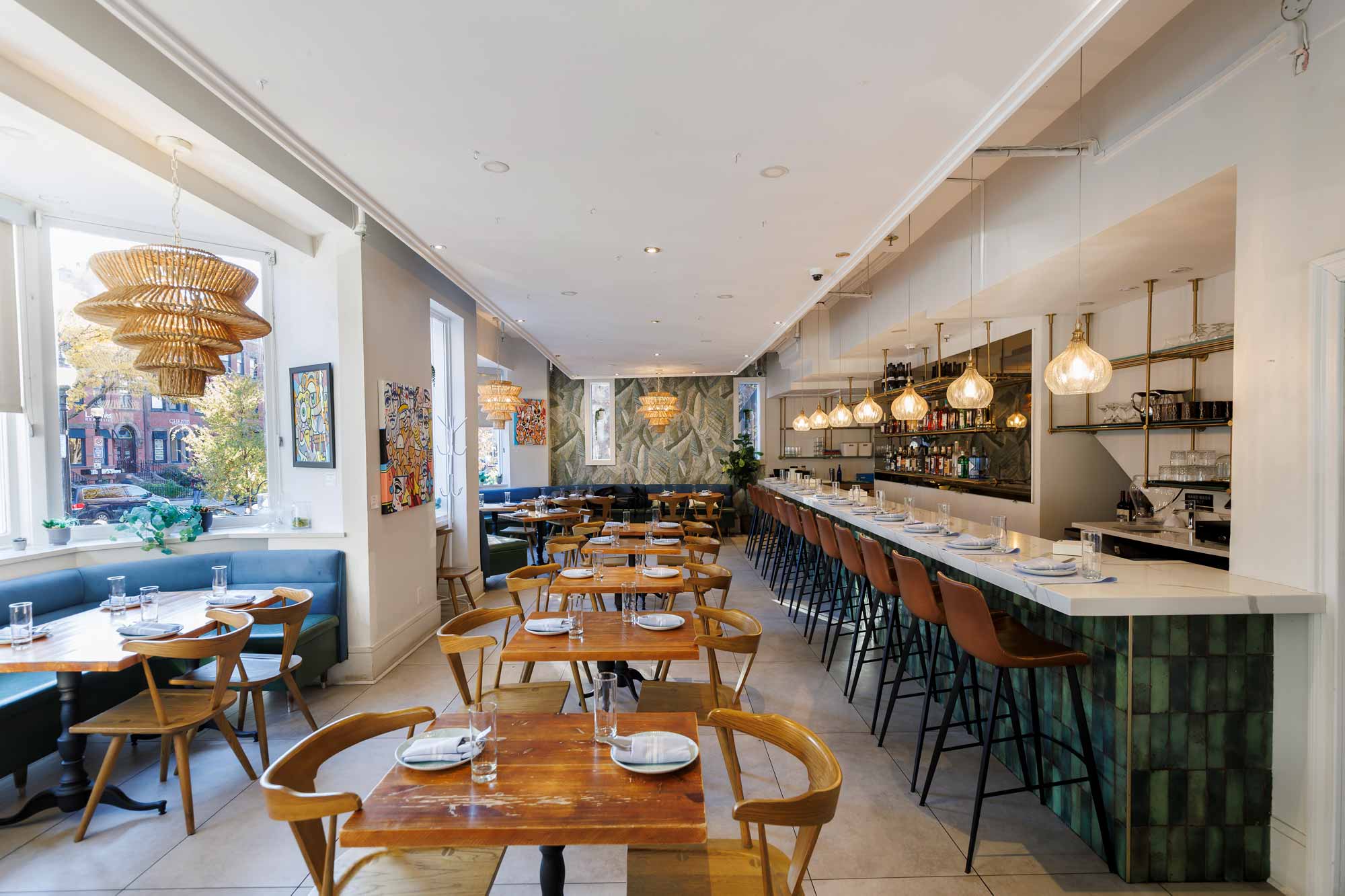
Join us for an unforgettable Mediterranean dining experience on historic Newbury Street.