
Classic Greek Dishes Everyone Should Try
Greek food is one of those cuisines almost everyone has tasted without really knowing the names. You have probably had a gyro or dipped pita in hummus and kept moving. We hear that from guests all the time. What they do not always realize is how much else is waiting once you start looking past the familiar.
Here are the classic Greek food dishes worth trying, what each one actually is, and how they fit into the wider world of Mediterranean dining.
Quick Answer: The most loved classic Greek dishes include moussaka, souvlaki, gyro, spanakopita, tzatziki, Greek salad, and avgolemono soup. Most are built on olive oil, fresh herbs, lamb or seafood, and vegetables, and they are best shared across the table.
In This Post
- What Makes a Dish Greek?
- The Dips and Small Plates
- The Main Dishes
- The Salad and the Soup
- How to Try Them Without Overthinking It
- Greek Dishes FAQ
What Makes a Greek Food Dish?
Greek cooking sits inside the larger Mediterranean family, so it shares a foundation with its neighbors: olive oil instead of butter, plenty of vegetables, fresh herbs, seafood and lamb treated simply. If you want to see how the two connect, our guide to Greek versus Mediterranean food goes deeper on the differences.
What sets Greek cooking apart are a few signatures: tangy feta and thick yogurt, bright herbs like oregano and dill, lemon used generously, and a love of slow-baked layered dishes. Once you know those notes, the classics start to make sense.
The Dips and Small Plates
A Greek table usually starts with small plates built for sharing. A few you will see again and again:
- Tzatziki: Cool yogurt with cucumber, garlic, and dill. The dip everyone reaches for first, and the one that cuts through anything rich. It is one of the dips our guests come back to every visit.
- Spanakopita: A flaky phyllo pastry filled with spinach and feta. Crisp on the outside, soft and salty inside. Classic Greek bakery territory.
- Dolmades: Grape leaves stuffed with rice, herbs, and sometimes pine nuts. Small, savory, and a little tart. A staple of the Greek table that rarely gets enough attention.
- Saganaki: Pan-fried cheese, often finished with a squeeze of lemon. Simple, and hard not to love.
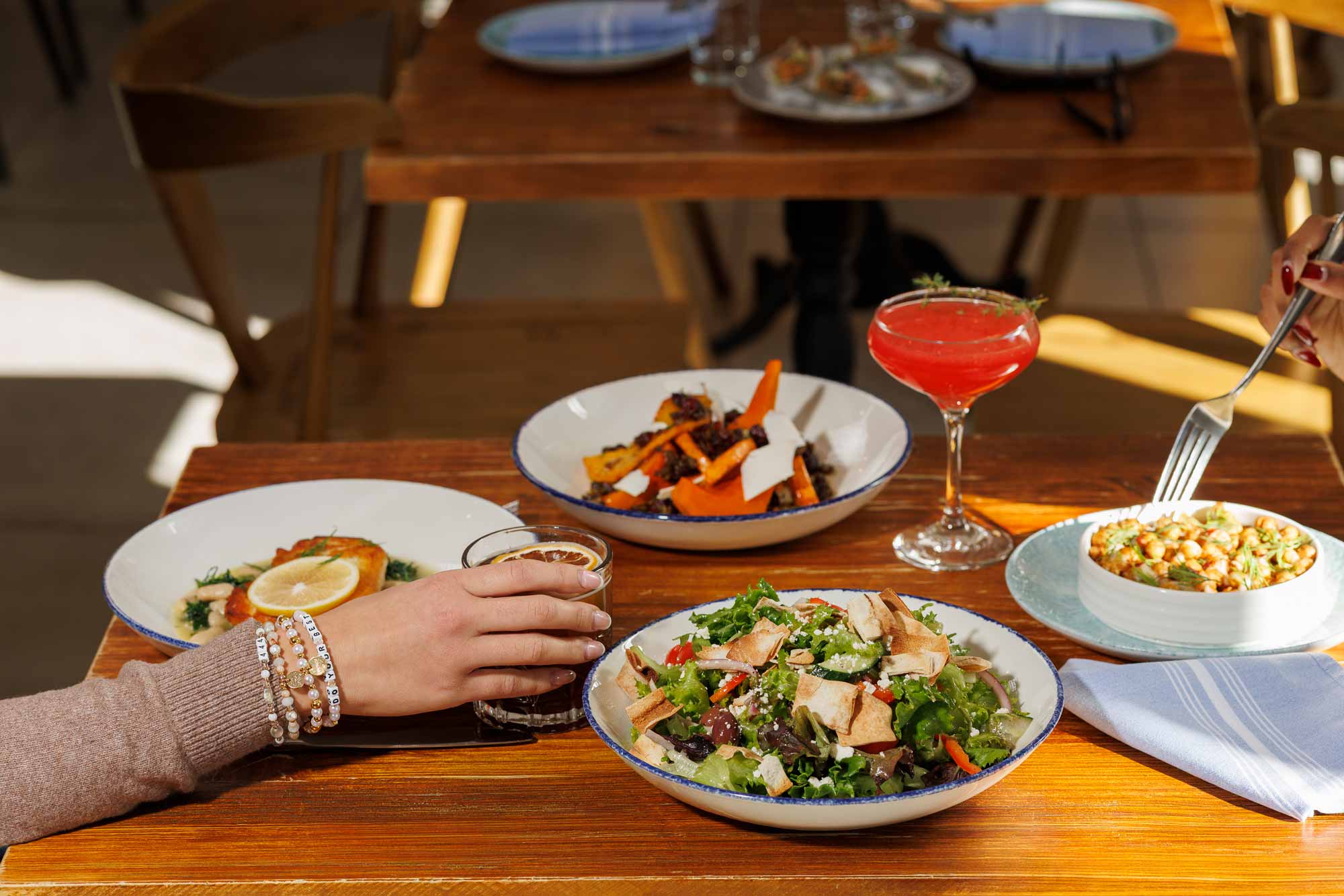
At Eva, our mezze section draws from this same tradition. Our hummus, muhammara, baba ghanoush, and tzatziki are the dips our regulars build their meals around. If you want to understand how shared-plate dining works before you sit down, that post explains it well.
The Main Dishes
This is where Greek cooking shows its range. The mains lean on lamb, slow baking, and the grill.
- Moussaka: A baked casserole of eggplant, spiced ground lamb, and a creamy bechamel top. Rich, layered, and deeply comforting. The Greek answer to lasagna, and one of the most recognized dishes in the cuisine.
- Souvlaki: Small skewers of grilled, marinated meat, usually pork or chicken. Smoky, simple, and easy to share across the table.
- Gyro: Seasoned meat roasted on a vertical spit, shaved thin, and tucked into pita with tomato, onion, and tzatziki. The dish most people meet first.
- Grilled fish: A coastal staple, cooked with olive oil, lemon, and herbs so the freshness carries through. Seafood and lamb are the heart of Greek cooking for a reason.
At Eva, our kitchen draws from that same instinct. The dinner menu features Spanish Octopus, Lamb Loin, and Sesame-Crusted Salmon, all sitting firmly in the Mediterranean tradition that Greek cooking helped shape.
The Salad and the Soup
Two more classics round out the table, and both are easy entry points for anyone new to Greek food.
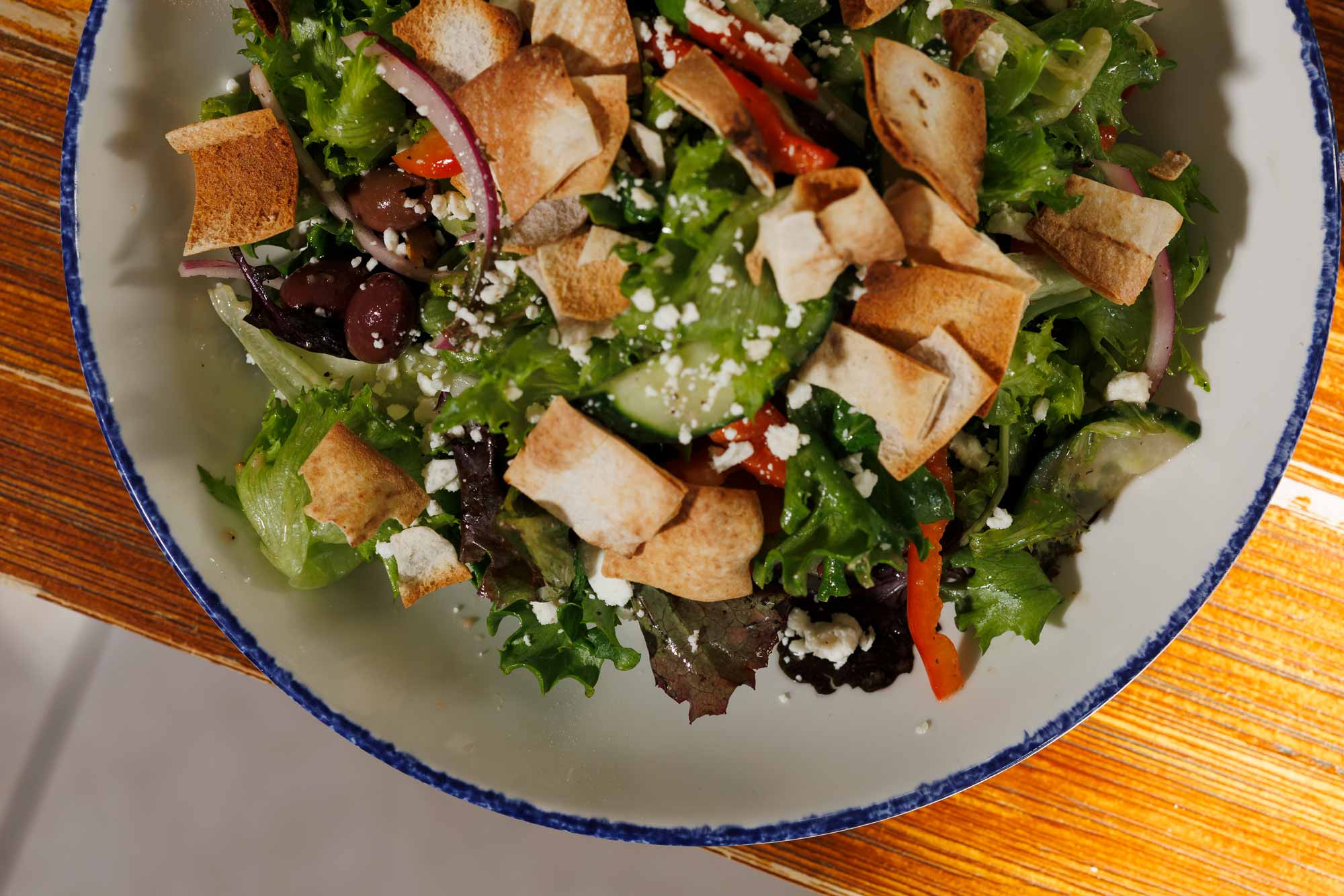
A real Greek salad, or horiatiki, has no lettuce at all. It is tomatoes, cucumber, red onion, olives, and a thick slab of feta, dressed in olive oil and oregano. Bright, fresh, and a full meal on its own in summer.
Avgolemono is the soup to know: a silky chicken and rice broth thickened with egg and lemon. It is comfort in a bowl, tangy in the best possible way, and the kind of thing that converts people on the first spoonful.
Pro Tip: If a Greek salad arrives with the feta in a whole slab on top rather than crumbled in, that is a good sign. It usually means the kitchen is making it the traditional way.
How to Try Them Without Overthinking It
You do not need to order everything at once. The easiest way in is to build a small spread and share it:
- Start with a dip and a small plate, like tzatziki and something flaky or fried.
- Add a Greek salad to keep the table fresh throughout the meal.
- Pick one main to share, a piece of grilled fish, or something slow-baked if you want something hearty.
- Eat family style, passing plates around. That is how this food is meant to work.
Order that way and you will cover the bright, the savory, the rich, and the fresh in one meal. That is the whole point. Our post on what to order at a Mediterranean restaurant walks through the same approach if you want more detail before you sit down.
Greek Dishes FAQ
1. What is the most popular Greek dish?
Gyro and souvlaki are probably the best known outside Greece, while moussaka and Greek salad are staples at the table. Most Greek meals are built around shared plates rather than one single dish.
2. What should a first-timer order at a Greek restaurant?
Start with tzatziki and warm bread, add a Greek salad, then share a grilled fish or souvlaki. Ordering a few small plates for the table is the easiest way to taste a range of flavors without committing to one thing.
3. Is Greek food the same as Mediterranean food?
Greek food is one part of the larger Mediterranean family, which also includes Italian, Spanish, Lebanese, and Turkish cooking. They share ingredients like olive oil, lamb, and fresh herbs, but each has its own signature dishes and traditions.
4. What is a traditional Greek salad?
A traditional Greek salad, or horiatiki, has no lettuce. It is tomatoes, cucumber, red onion, olives, and a slab of feta, dressed with olive oil and oregano. The lettuce-based version is a later adaptation.
5. Is Greek food healthy?
It leans that way, since it is built on vegetables, olive oil, seafood, and legumes. Our guide to the health benefits of the Mediterranean diet covers what the research shows, and it applies to Greek cooking too.
Taste the Mediterranean at Eva
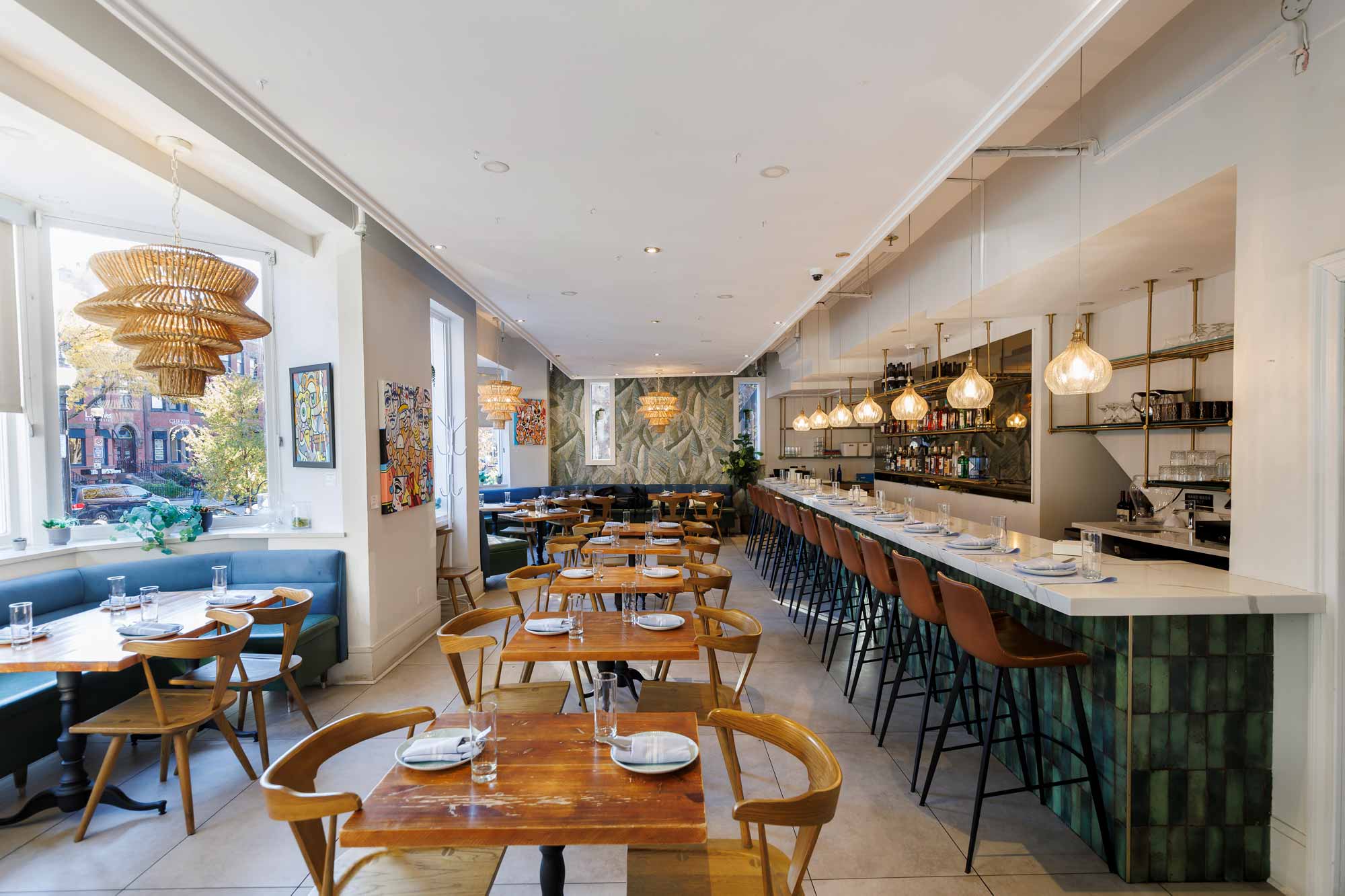
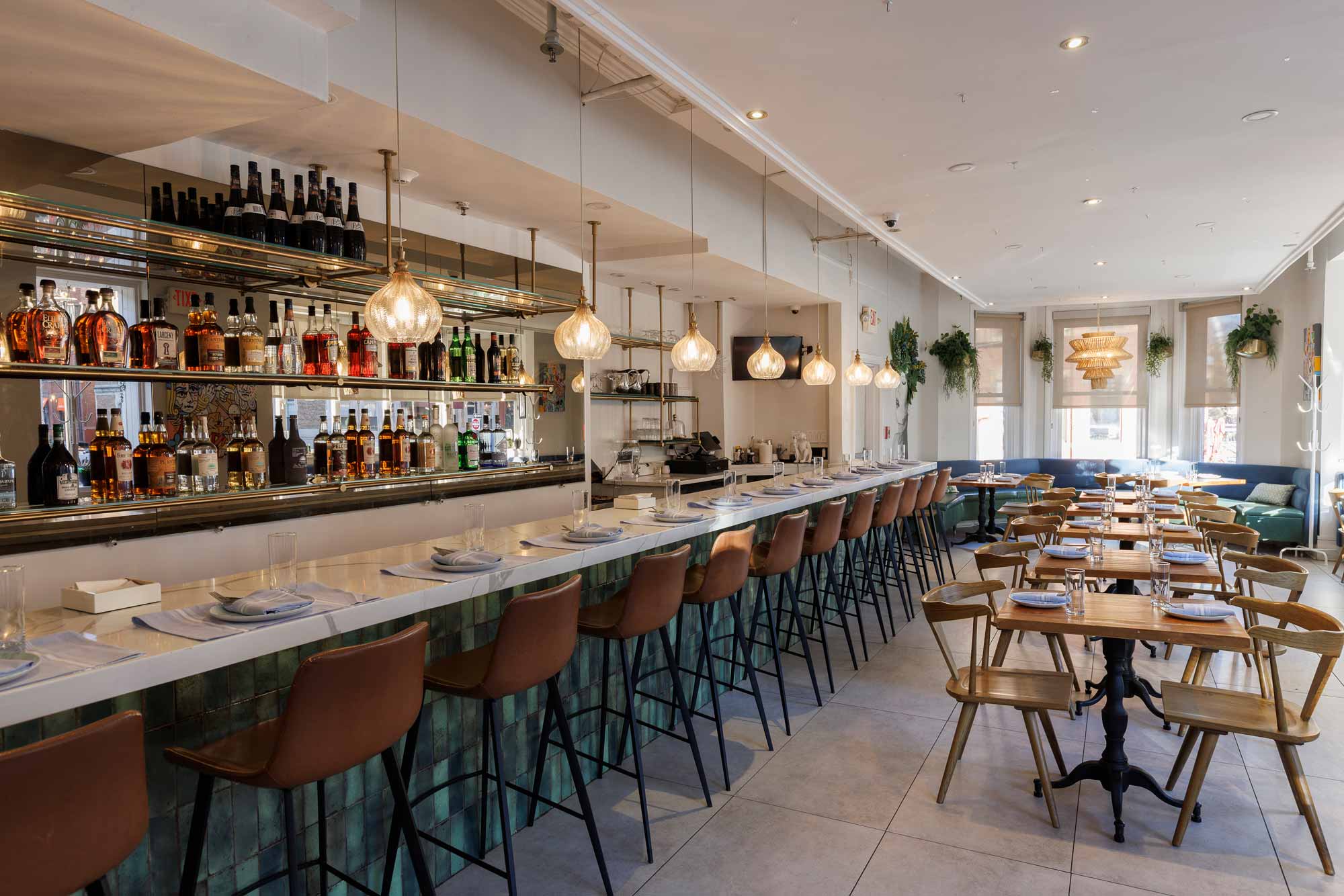
Greek cooking is one thread in a much bigger Mediterranean story, and the best way to understand it is to sit down and share a table. At Eva on Newbury Street, our menu draws from across the region, from fresh mezze dips to grilled seafood and lamb. Come explore it in the heart of Back Bay.
Eva
279A Newbury Street, Boston, MA 02115
See the full menu or get in touch.
Flavors beyond the plate
Culinary tales that capture the essence of Mediterranean spirit
Your table awaits
Join us for an unforgettable Mediterranean dining experience on historic Newbury Street.