
What Is Mezze? A Guide to Mediterranean Small Plates

Quick Answer: Mezze is a spread of small shared dishes from the Eastern Mediterranean: dips, flatbreads, grilled vegetables, cured meats, all dropped in the center of the table for everyone to pick from. Less of a course, more of a way to eat together.
You've probably seen the word on a menu and weren't sure what to make of it. Maybe you recognized hummus, ordered that, and moved on. We see it happen every week at Eva.
But here's what you missed: the muhammara that our regulars can't stop talking about, the baba ghanoush with its charred, smoky depth, and six other dips beyond that. Our guests consistently tell us the hardest part of dinner is narrowing it down to just three.
Below, we'll cover where the word actually comes from, what goes into a proper mezze platter, how it changes depending on where you are in the Mediterranean, and (if you've never done this before) how to order without overthinking it.
In This Post
- Where Does the Word "Mezze" Come From?
- What's in a Typical Mezze Spread?
- How Does Mezze Differ Across the Mediterranean?
- How Do You Actually Eat Mezze?
- How to Order Mezze at a Restaurant
- Frequently Asked Questions
- Experience Mezze in the Heart of Boston
Where Does the Word "Mezze" Come From?
The word comes from Persian. Maze means "taste" or "relish." It moved into Turkish as meze, meaning appetizer, and from there it spread across the Ottoman Empire: Beirut, Athens, the Balkans. Everywhere the empire reached, the tradition stuck around.
You'll see it spelled half a dozen ways: mezze, meze, maza, mezethes. The spelling changes, but the meze meaning doesn't: small tastes meant to be shared before or instead of a bigger meal.
And this isn't some recent foodie trend. Medieval Arabic texts mention naql, salted almonds and small bites served with drinks. Centuries later, that custom is basically what we now call mezze. It's one reason UNESCO recognized the Mediterranean diet as an Intangible Cultural Heritage. The social ritual of gathering around the table, picking at shared plates, and talking over food matters just as much as what's being served.
What's in a Typical Mezze Spread?
A good mezze spread hits you with everything at once: creamy, crunchy, tangy, smoky, and bright. There's no single star dish. Instead, you're building a mosaic where every small plate plays off the others.
Dips and Spreads
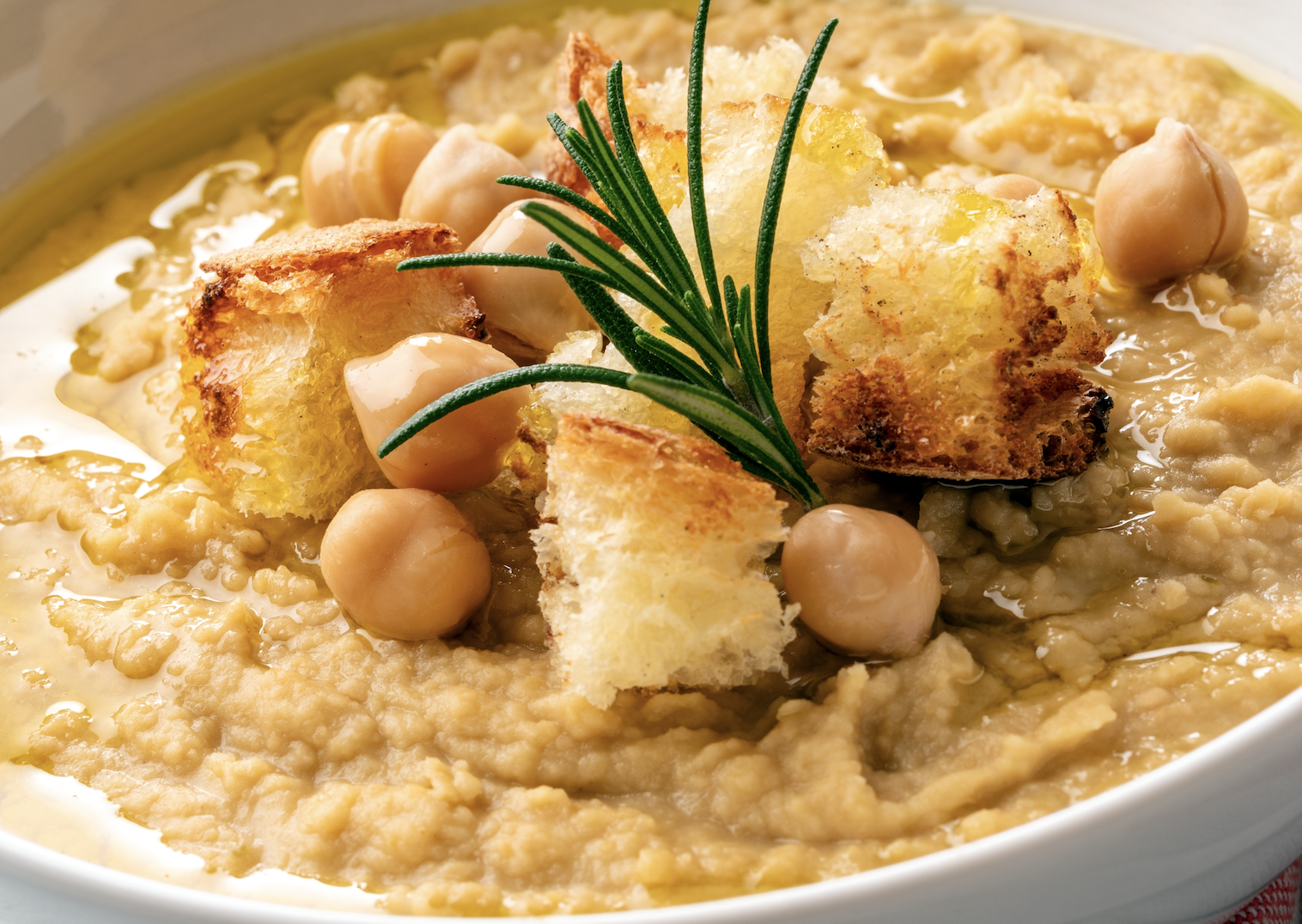
Hummus (chickpeas blended with tahini and lemon) is the one most people recognize, and it's a great place to start. But the dips go well beyond that.
Baba ghanoush has a smoky, almost charred quality from roasted eggplant that gives it a completely different character. Muhammara is a red pepper and walnut dip with a slow-building heat, and it's the one first-timers at Eva tend to get obsessed with. Then there's tzatziki (cool yogurt, cucumber, garlic) and labneh, a thick strained yogurt that anchors everything else on the table. You'll spot labneh all over our dinner and brunch menus because it pairs well with almost anything.
Bread and Grains
Pita is the classic, usually served warm and torn by hand. But you might also see lavash (thin and crispy) or manakeesh, a Lebanese flatbread baked with za'atar and olive oil that could easily be a meal on its own. The bread isn't just decoration. It's how you eat everything else on the table.
Vegetables, Pickles, and Olives
Marinated olives, roasted peppers, pickled turnips, fresh cucumbers, and tomatoes all play an important role. They act as a palate reset between the richer dips, giving you something acidic and bright that keeps your taste buds engaged.
Proteins
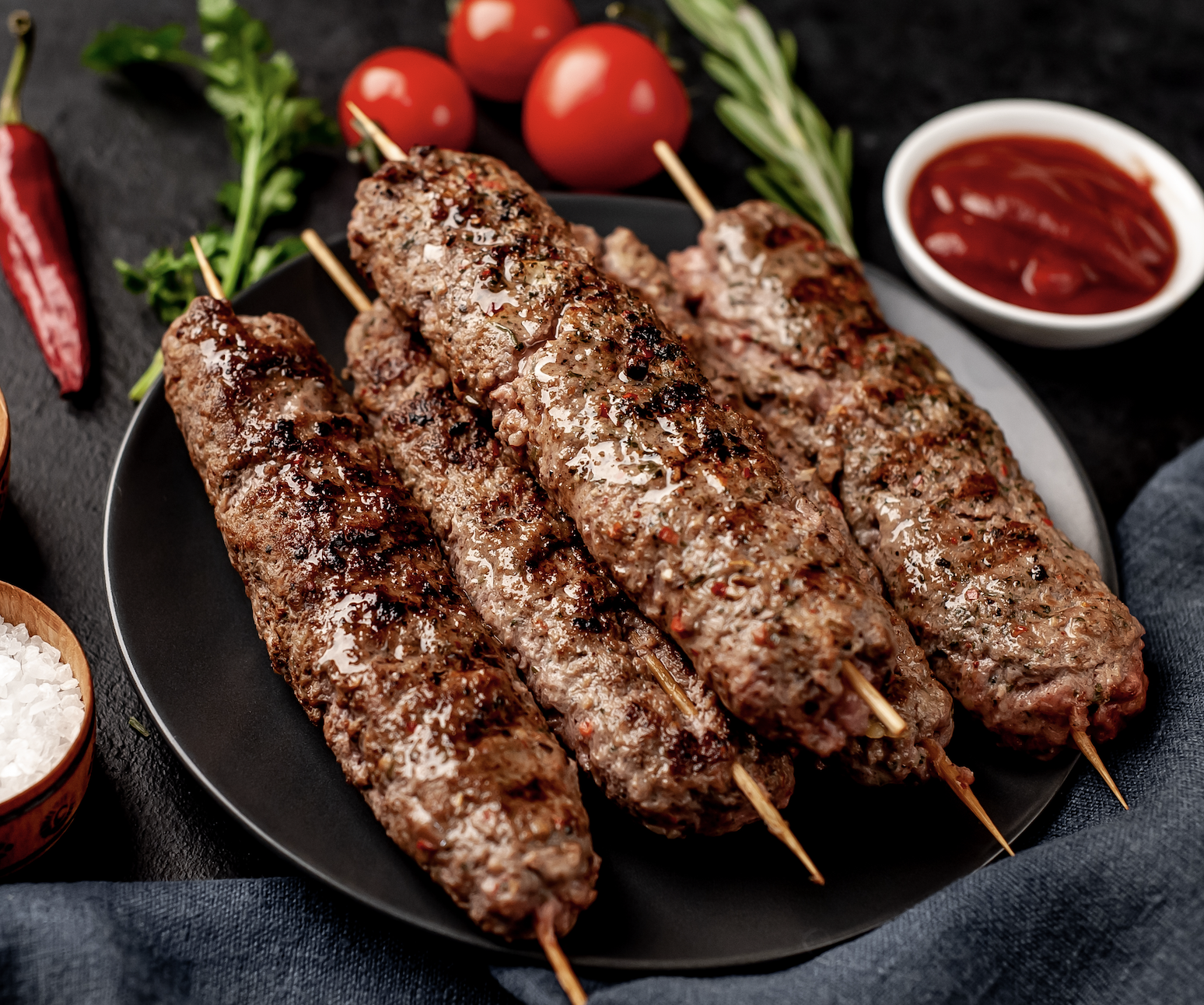
Grilled halloumi, falafel, kebabs, and sometimes cured sujuk sausage round out the spread. Lamb or seafood may appear in larger versions, but the proteins always play a supporting role to the dips.
Mezze Cheat Sheet
- Hummus: Chickpea-tahini dip. Nutty and mild.
- Baba Ghanoush: Fire-roasted eggplant. Smoky and earthy.
- Muhammara: Red pepper and walnut spread. Sweet with a slow heat.
- Labneh: Strained yogurt. Tangy and cool.
- Tzatziki: Yogurt with cucumber and garlic. Herby and refreshing.
- Falafel: Fried chickpea fritters. Crispy and savory.
- Halloumi: Grilled semi-hard cheese. Salty and squeaky.
That covers the basics, but what actually lands in front of you can look very different depending on where you are in the Mediterranean.
How Does Mezze Differ Across the Mediterranean?
Levantine mezze (Lebanon, Syria, Jordan, Palestine) is what most people picture when they hear the word. Tabbouleh, fattoush, stuffed grape leaves, and all the dips you'd expect. Dishes tend to arrive in waves: cold dips first, then warm plates, then grilled meats. A full Lebanese mezze dinner can easily include 20 or 30 small plates over the course of a couple hours.
Greek mezze (called mezethes) goes heavier on feta, kalamata olives, grilled octopus, and spanakopita. It's usually served alongside ouzo or wine, and the portions tend to be a bit bigger.
Turkish meze features ezme (a spicy pepper paste), cacık (their version of tzatziki), stuffed mussels, and cold eggplant salads. The pacing is slower, built around raki and conversation that stretches late into the evening.
The styles are different, but the common thread is always the same: food goes to the center of the table, everybody shares, and nobody's in a rush. (For more on how all these traditions connect, we wrote a longer piece on what Mediterranean food actually is.)
How Do You Actually Eat Mezze?
There's no wrong way, but there is a rhythm to it.
Start with the cold dips and bread. Tear off some pita, scoop through the hummus, and drizzle a little olive oil. Work through the lighter flavors first (labneh, tzatziki, olives) before moving to the bolder ones like muhammara.
If the spread includes warm dishes like kebabs, falafel, or grilled halloumi, those usually come out second. Let the dips set the tone before the proteins arrive.
Pro Tip: You're not supposed to finish everything, and that's what trips most people up. Order more variety in smaller amounts instead of fewer dishes in larger portions. The whole idea is tasting, not clearing plates.
One thing we've noticed after years of watching tables at Eva is that the groups who order mezze always end up staying the longest. Glasses get refilled, plates get passed around, and the conversation keeps going. That's really what makes this style of eating special.
How to Order Mezze at a Restaurant
If you've never done this before, here's a simple formula: pick one creamy dip, one bold dip, and one wildcard.
Hummus is the safe creamy pick. For bold, go with muhammara or baba ghanoush. The wildcard is where you try something new, like fava bean purée, smoked salmon dip, or whipped goat cheese.
At Eva, our dinner mezze lets you pick any three dips served with warm toasted pita. That's plenty for two people as a starter, or for one person who wants small plates as their meal.
A Few Things Worth Knowing
- Talk to your server. Mezze is personal, and a good server will know what the kitchen is doing best that night.
- Mix your textures. Ordering three creamy dips is a common mistake. Add something crunchy (falafel, crispy chickpeas) or briny (olives, pickled vegetables) to balance the spread.
- Pair with something acidic. Dry rosé, a crisp white wine, or a citrusy cocktail all work well. The acidity cuts through the richness of the dips.
Frequently Asked Questions
Is mezze the same as tapas?
They share the same concept of small shared plates, but the roots and flavors are completely different. Mezze comes from the Eastern Mediterranean (Lebanon, Greece, Turkey), while tapas is Spanish. One leans on chickpeas, yogurt, and warm spices, while the other features Manchego, jamón, and olive oil in its own distinct style. The dining philosophy overlaps, but the food itself is worlds apart.
Can you make a full meal out of it?
That's how it works in Lebanon. A proper Lebanese mezze dinner runs 20 or 30 plates over a couple of hours, and nobody orders a "main course." At Eva, our pick-three mezze with pita is enough for two people as a starter, and adding a salad or kebab makes it a full meal.
Is mezze vegetarian-friendly?
Very much so. Most of the classic dips (hummus, baba ghanoush, muhammara) are actually vegan. Add labneh and feta and you've got plenty of vegetarian options without even trying. It's one of the most plant-forward ways to eat out. (We wrote more about this in our Mediterranean diet guide.)
Experience Mezze in the Heart of Boston
Mezze is the kind of food that turns a quiet table into a lively one, and it's why we built our dinner menu around eight house-made dips and spreads, each one drawing from a different corner of the Mediterranean.
Whether it's your first time or your hundredth, there's always a new combination to try. We'd love for you to come find it on Newbury Street.
Eva
279A Newbury Street, Boston, MA 02115
(617) 546-5515
Flavors beyond the plate
Culinary tales that capture the essence of Mediterranean spirit
Your table awaits
Join us for an unforgettable Mediterranean dining experience on historic Newbury Street.