
What Is Za’atar?
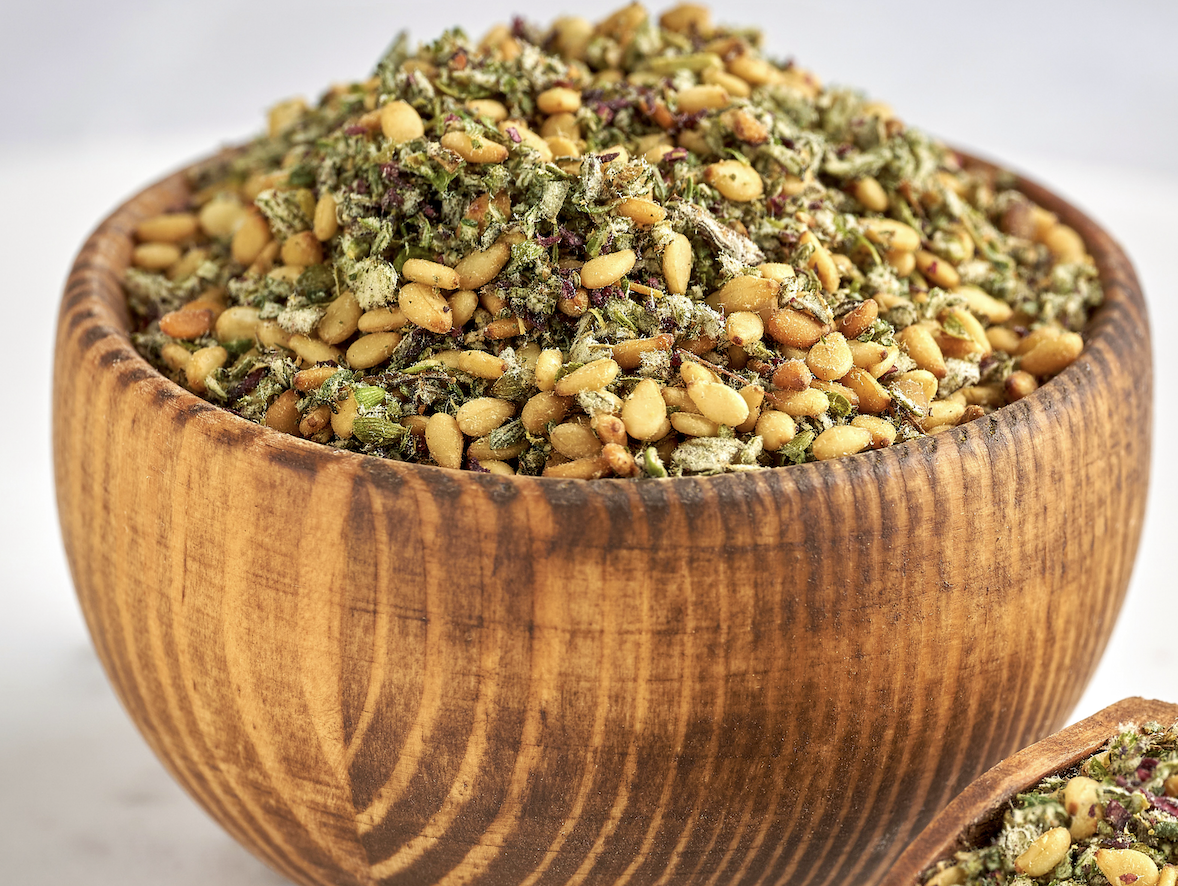
If you’ve ever dipped warm bread into olive oil and found it dusted with a green-brown, tangy, nutty seasoning, you’ve met za’atar. It’s one of the most beloved flavors in Mediterranean and Levantine cooking, and once you know what it is, you’ll start noticing it everywhere. Here’s a simple guide to what za’atar is, how it tastes, how to use it, and which dishes to try.
So, What Exactly Is Za’atar?
Za’atar (pronounced ZAH-tar) means two things. In Arabic, it’s the word for a family of wild herbs related to thyme and oregano. It’s also the name of the classic spice blend made with those herbs.
The blend is most closely associated with the Levant, the region that includes Lebanon, Syria, Palestine, Jordan, and Israel. Families and spice shops often have their own recipe, but most versions share the same core ingredients:
- Dried thyme, oregano, or wild marjoram for the herbal base
- Toasted sesame seeds for richness and a nutty crunch
- Sumac for a bright, lemony tang
- Salt to bring everything together
Some blends add a little cumin, coriander, or fennel seed, but the herb, sesame, and sumac trio is the heart of it.
What Does Za’atar Taste Like?
Za’atar is earthy, herbal, tangy, and savory all at once. The thyme and oregano bring a warm, slightly piney note, the sesame adds a toasty depth, and the sumac gives a citrusy brightness without the acidity of lemon juice. It’s a seasoning that makes food taste fresher and more layered, rather than hotter or heavier.
If you like the flavor of an herb-roasted chicken with a squeeze of lemon, you’ll probably love za’atar.
How Is Za’atar Used?
One reason za’atar is so popular is its versatility. In Mediterranean kitchens it’s used at breakfast, lunch, and dinner, and it works as both a cooking ingredient and a finishing touch.
With olive oil and bread. The simplest and most traditional use is mixing za’atar with good olive oil and dipping warm flatbread into it. It’s a staple of Levantine breakfast tables.
On flatbread. Za’atar mixed with olive oil is spread over dough and baked to make man’oushe, a beloved Lebanese flatbread eaten for breakfast or as a snack.
On dips and cheeses. A sprinkle over hummus, labneh, or feta adds herbal brightness and a little crunch.
On eggs. Scrambled, fried, or baked eggs get a big flavor boost from a pinch of za’atar. Shakshuka is a natural pairing.
On vegetables. Toss carrots, cauliflower, eggplant, or potatoes in olive oil and za’atar before roasting.
On meat and fish. Use it as a rub for chicken, lamb, or fish, or stir it into a marinade with lemon juice and olive oil.
On everyday snacks. Popcorn, fries, avocado toast, and roasted chickpeas all get better with a shake of za’atar.
Dishes to Try with Za’atar
If you’re new to the flavor, these are the best places to start.
- Man’oushe (za’atar flatbread): The classic. Warm, chewy, herby, and perfect with a cup of tea or coffee.
- Labneh with za’atar and olive oil: Tangy strained yogurt topped with a drizzle of oil and a generous sprinkle of za’atar. Scoop it up with pita.
- Za’atar roasted chicken: Crispy skin, juicy meat, and a bright finish with lemon.
- Za’atar-spiced eggs: A simple weekend brunch upgrade. If brunch is your thing, take a look at our brunch menu.
- Hummus with za’atar: A pinch on top turns a familiar dip into something more interesting.
- Roasted vegetables with za’atar: An easy side dish that pairs with almost any main.
Za’atar shows up across Mediterranean cooking, so it’s worth asking your server about it when you’re choosing small plates. You can browse our current lunch menu and dinner menu to see what’s available, or explore all of our menus.
Za’atar vs. Sumac: What’s the Difference?
People often confuse the two. Sumac is a single spice made from dried, ground red berries, and it tastes tart and lemony. Za’atar is a blend, and sumac is one of its ingredients. Think of sumac as a building block and za’atar as the finished seasoning.
How to Buy and Store Za’atar
- Check the ingredients. Good za’atar should list herbs, sesame, sumac, and salt. Avoid blends that are mostly filler.
- Look at the color. Vibrant color and a fragrant smell are signs of freshness.
- Store it airtight. Keep it in a cool, dark place. It tastes best within six months to a year.
- Toast it lightly. A quick warm-up in a dry pan, or a stir into hot olive oil, wakes up the flavor.
Can’t Find Za’atar? Try This Substitute
In a pinch, mix dried thyme or oregano with toasted sesame seeds and a pinch of sumac and salt. If you don’t have sumac, a little lemon zest comes close.
Come Try Our Mediterranean Flavors on Newbury Street at Eva Boston!
Reserve your table here or contact us with questions.
Flavors beyond the plate
Culinary tales that capture the essence of Mediterranean spirit


Your table awaits
Join us for an unforgettable Mediterranean dining experience on historic Newbury Street.